Stepover & scallop height
0.15 mm · 3.8 µm
Flat-plane ball-nose cusp & finishing line count: 1,200 lines (R=0.75 mm)
Dual-Process Relief & Backlit Workflow
Backlit lithophanes and front-lit hardwood carvings obey opposite optical physics. Understand when to map pixel luminance to translucent thickness versus when to map AI scene depth to carved timber elevation—and preview both in 3D before export.
Three free AI previews per day · no account to try · 1 credit unlocks raw EXR, true 16-bit PNGs & STL ($12 / 30 credits)
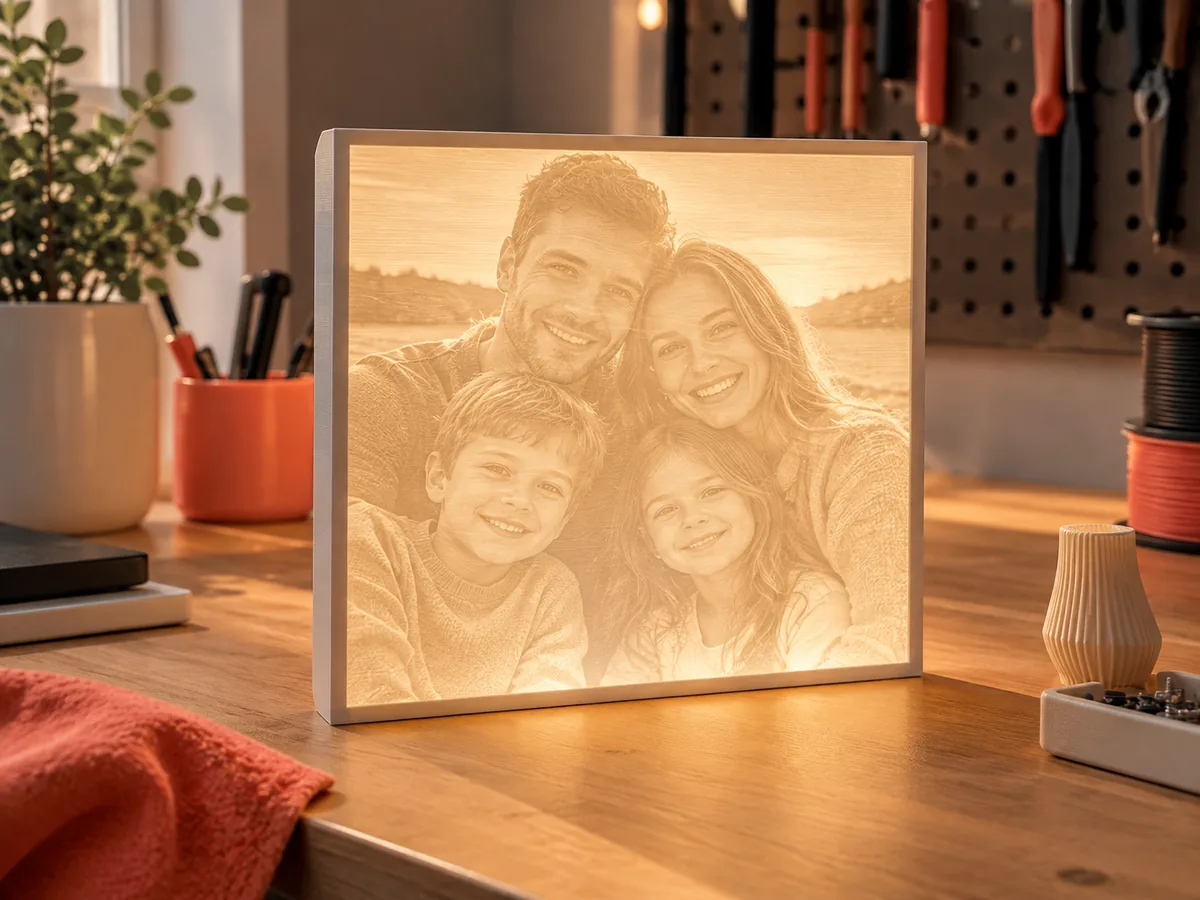
Live manufacturing workbench
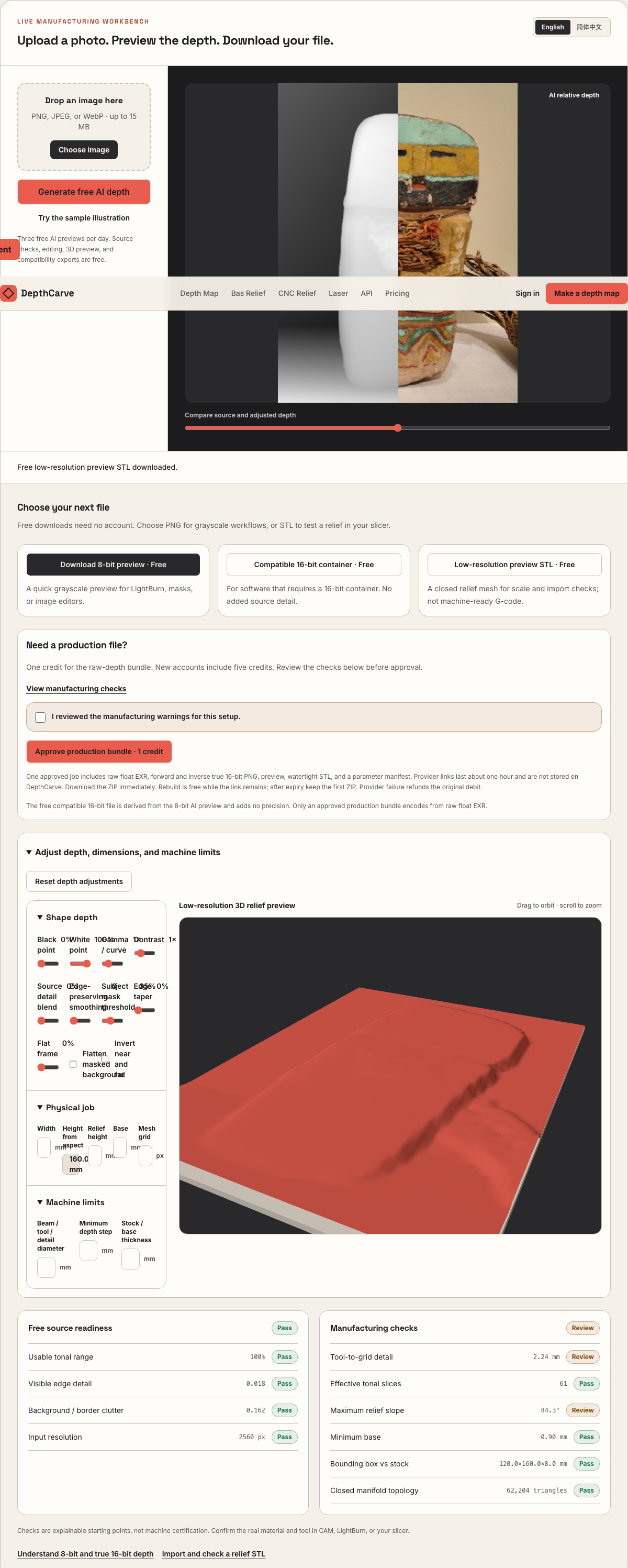
Three free AI previews per day. Source checks, editing, 3D preview, and compatibility exports are free.
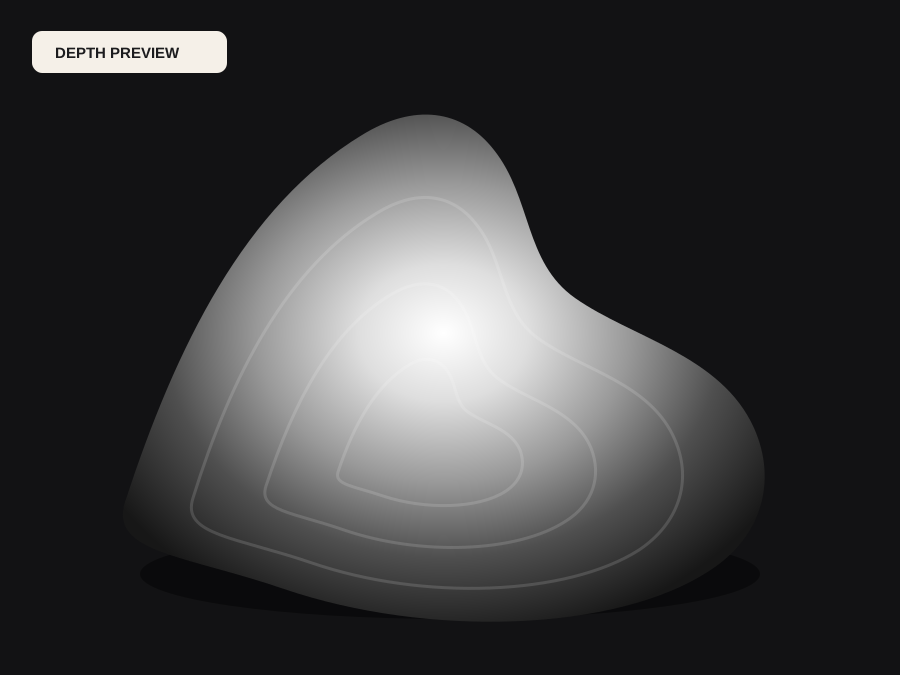
What happens to an ordinary photo (no login required):
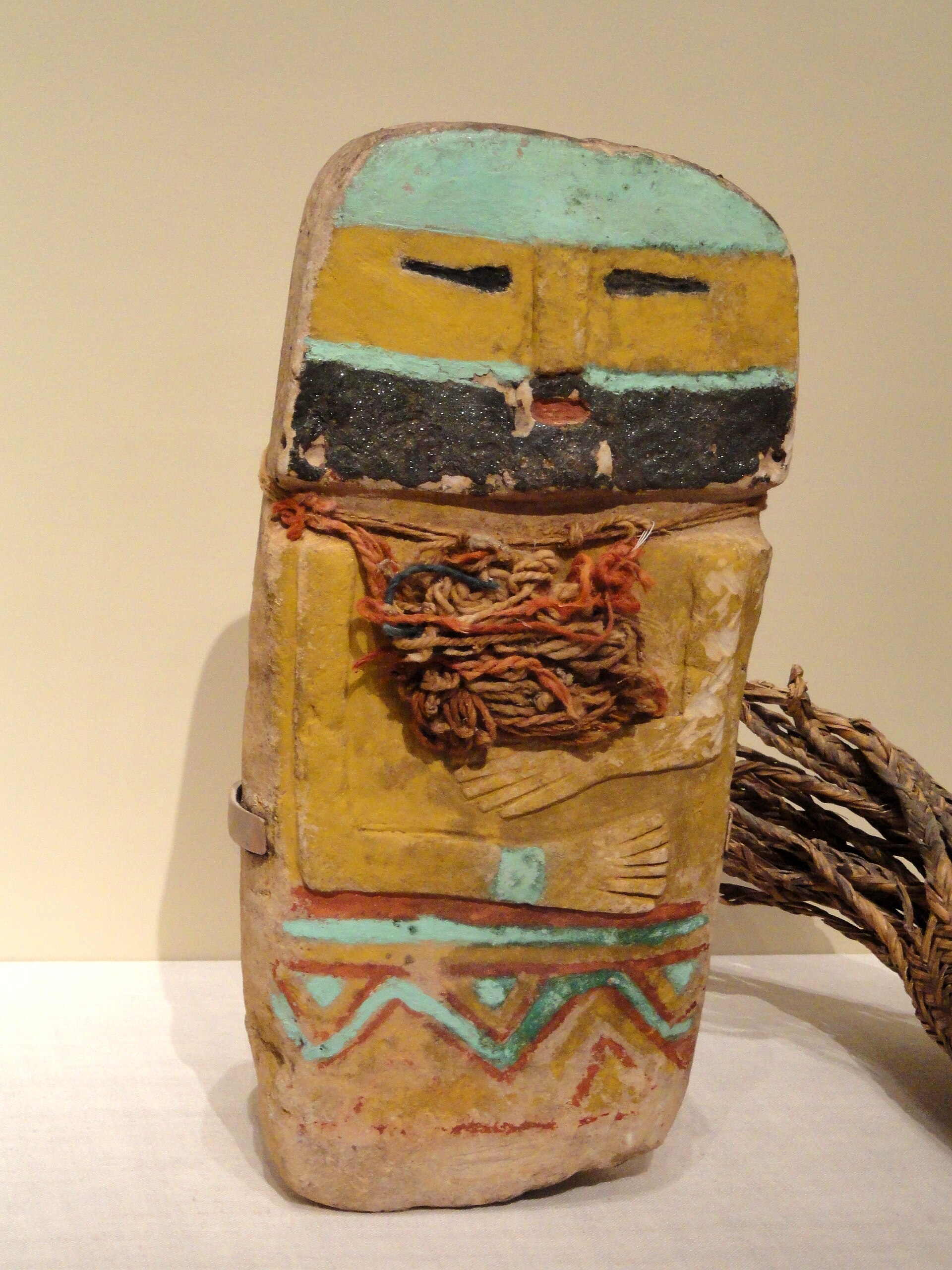
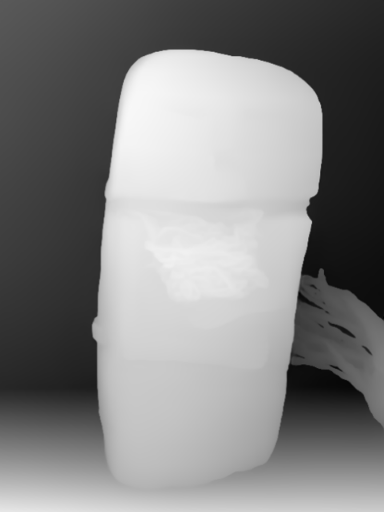
Camera shadows get separated from true 3D height—ready for CNC ball-nose finishing, LightBurn 3D Sliced laser, or resin/FDM printing.
Choose a source image to begin.
Free browser shop calculator · zero server cost
Check whether your planned cutter radius, finishing stepover, pixel width, and Z pass depth match the blank before generating a relief or importing into VCarve, Aspire, Carveco, or LightBurn.
Load a starting shop profile
Stepover & scallop height
0.15 mm · 3.8 µm
Flat-plane ball-nose cusp & finishing line count: 1,200 lines (R=0.75 mm)
Bit radius vs pixel pitch
8.5 px / R · Cutter-filtered
0.088 mm/px · min feature 1.50 mm. Multiple pixels sit inside one ball-nose radius; micro-details narrower than tool diameter are filtered physically.
Carving passes & backing stock
3 passes · 1.67 mm
Backing ≥ 1.5 mm (7.0 mm left)
8-bit vs true 16-bit Z step
19.6 µm vs 0.08 µm
High 8-bit terrace risk · 65 steps across 25% ramp (~1.41 mm terraces)
8-bit: 65 ramp levels · True 16-bit: 16,385 ramp levels
8-bit preview / compatibility PNG (256 max levels)
Discrete Z plateaus appear across gentle cheeks, backgrounds, and >256-slice Galvo jobs. Repackaging an 8-bit preview into a 16-bit container keeps the same 256 steps.
True 16-bit raw-float export (65,536 levels · 1 credit)
Encoded directly from MoGe2 raw float EXR in the Production ZIP alongside an inverse 16-bit PNG and watertight STL—keeping Z steps well below cutter scallop height.
Geometric screening only. This estimator never generates G-code, spindle speeds, feed rates, or laser power settings—always simulate in CAM and cut scrap first.
Real work, real failure cost
The useful product is not the model call. It is the review loop that catches a reversed field, a noisy border, or an impossible relief before the next tool turns that mistake into wasted time.
01
Offer both framed hardwood relief plaques and LED-backlit Corian or PLA lithophanes from customer photos.
02
Control minimum translucent floor thickness (0.6 mm–0.9 mm) and maximum dark-shadow thickness (2.8 mm–3.4 mm) accurately.
03
Verify exact millimeter panel dimensions in a slicer or CAM preview before cutting hardwood frames.
01
A classic lithophane machined in 6 mm Glacier White Corian or printed in matte white PLA works by Beer-Lambert light attenuation: thin regions (0.7 mm) glow bright when backlit, while thick regions (3.2 mm) block light to create dark pupils, dark hair, and shadows. With the LED switched off, a lithophane looks weird from the front because bright teeth are carved as deep pits.
An opaque walnut or cherry wood carving has zero light transmission. Every visual cue comes from ambient and raking light hitting physical slope and elevation, so noses, cheeks, and foreground paws must stand proud regardless of whether the subject wore a dark sweater or a white shirt.
02
For true backlit lithophanes in Corian, porcelain, or white filament, direct tonal luminance with negative polarity (dark pixels = thick plastic, bright pixels = thin floor) preserves photographic skin shading, eyelashes, and iris sparkle when lit from behind. You can run pure local luminance lithophanes anytime on our dedicated Lithophane Maker page.
For opaque hardwood carving—or hybrid shadow-box panels viewed in front light—AI monocular depth estimation orders foreground and background geometrically first so dark shadows do not gouge trenches across the face.
03
Routing a Corian lithophane typically skips roughing altogether and cuts in a single raster pass at 45 degrees using a 0.8 mm–1.5 mm tapered ball-nose bit at 8%–10% stepover, leaving a critical 0.6 mm–0.8 mm translucent floor that will punch through if your spoilboard is not freshly surfaced.
Hardwood bas-reliefs use deeper Z-travel (4 mm–9 mm), require at least 5 mm–8 mm of stable backing timber to resist warp, and benefit from cutting slightly angled to dominant wood grain. Check both cutter cusp height and remaining backing margin in the estimator below before exporting.
04
Whether you are sliding a printed lithophane into a 4 mm dado groove or clamping a cherry blank onto your CNC spoilboard, physical bounding-box errors ruin parts faster than model nuance.
Set your exact millimeter width, relief amplitude, and base thickness in the workbench, open the free preview STL in Bambu Studio, PrusaSlicer, or Vectric to confirm fit and polarity, and spend one credit only when you need the dense raw-float production bundle.
Five bounded stages
Check source contrast, edge detail, border clutter, and resolution before an AI call is trusted.
Adjust the subject mask, background, curve, detail, smoothing, taper, frame, and real dimensions for free.
Compare beam or tool size, tonal slices, slope, base, manifold topology, and bounding box with the real setup.
Approve one successful production job only after the free 2D and 3D previews earn acceptance.
Download one verified ZIP and inspect it in LightBurn, CAM, or a slicer before committing production material.
Choose by next action
| Output | Use it for | It does not guarantee | Cost |
|---|---|---|---|
| 8-bit PNG | Preview, mask, laser and compositing tests | Physical scale or machine settings | Free |
| Compatible 16-bit PNG | Compatibility with grayscale depth workflows | Additional source precision | Free |
| Preview STL | Low-cost scale and import checks | Printability, tool reach, or safe G-code | Free |
| Production job bundle | Raw EXR, true 16-bit pair, STL, preview and manifest | Hidden surfaces or certified metric truth | 1 credit |
Straight answers
Yes, and also check what the pixels mean. Wood carving wants near objects raised high (positive relief from scene depth). Backlit lithophanes want bright pixels thin and dark pixels thick so backlit LEDs shine brightest through thin areas.
Most CNC makers keep a 0.6 mm to 0.8 mm minimum floor in 1/4-inch (6.35 mm) white Corian, provided the spoilboard is freshly surfaced and the sheet is held flat with vacuum or uniform tape.
If your goal is strictly a backlit tonal lithophane from pixel brightness without AI scene-depth estimation, open our dedicated Lithophane Maker workflow linked below—it converts luminance to thickness locally for free.
Yes. Source checks, shaping sliders, 8-bit PNG, compatibility 16-bit PNG, and a low-resolution preview STL require no account. One credit unlocks the raw EXR, verified true 16-bit forward/inverse PNGs, and dense watertight STL.
Use local brightness-to-thickness mapping built specifically for backlit prints.
Plan front-lit hardwood router reliefs and ball-nose stepover.
Dial in minimum floor, maximum wall thickness, and layer orientation.
Review panel dimensions, wall thickness, and mounting checks.
Preview the idea free. Pay 1 credit for production output.
Start without an account—3 free AI previews per day. Unlock raw EXR, true 16-bit PNG heightmaps, and watertight STL with the $12 Maker Pack (30 credits) or $39 Shop Pack (150 credits).